

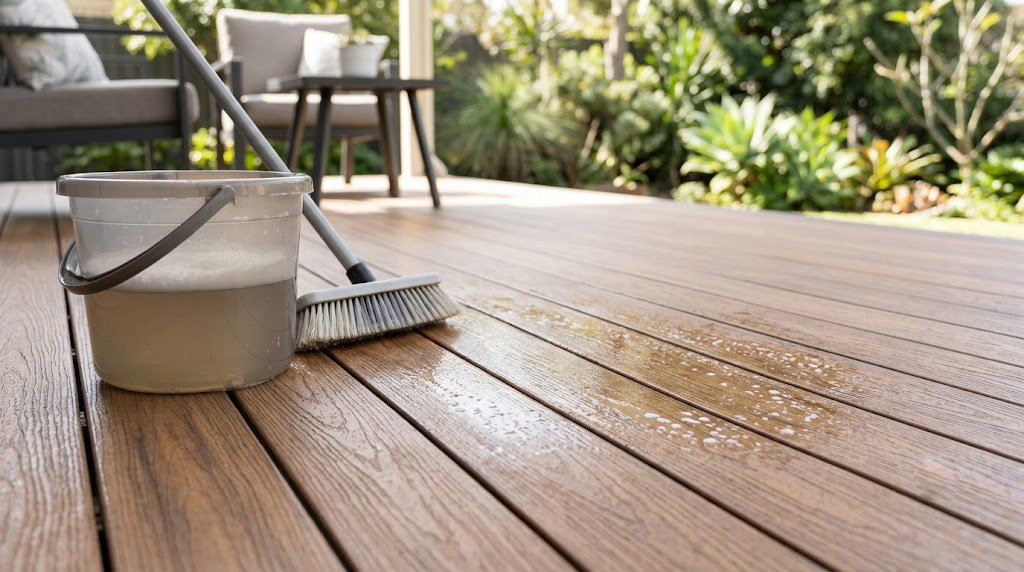
The main reason people move from hardwood to composite is the weekend they get back. There is no annual sanding, no oiling, no staining. That said, “low maintenance” is not “no maintenance”, and a short routine keeps a composite deck looking close to new for years.
The seasonal wash
Twice a year, sweep the deck clear and wash it with warm water and a mild soap, working along the grain with a soft broom. Rinse thoroughly. In Sydney, the useful timing is once after winter and once at the end of summer, when pollen, salt air and barbecue season have all had a turn.
Everyday marks
- Food and drink spills — rinse them off soon after they happen rather than letting them dry in.
- Leaf litter — clear leaves from between boards and from the gaps at the perimeter so water keeps draining.
- Furniture scuffs — felt pads under chair legs and planter feet prevent most scratching.
- Pots and planters — raise them slightly so water is not trapped underneath.
What to avoid
Skip harsh solvents and steel wool. If you use a pressure washer, keep the pressure low, use a wide fan tip and keep it moving — a concentrated jet held in one spot can mark any decking surface, composite included.
Why it stays looking good
Our boards are water, termite and mould resistant, and UV and fade resistant, which is what keeps the colour stable through a Sydney summer. The material is designed to handle -40°C to 70°C, so expansion and contraction across the seasons is normal and allowed for in the installation gaps. That is also why the gaps matter: leave them clear and the deck manages itself.
A note on the frame
A composite deck is only as good as what is under it. Clips and screws should be the ones intended for the profile — see our decking fasteners — and the substructure needs enough ventilation for water to dry out after rain.
Planning a new deck or replacing an old one? Look through the composite decking range or talk to our team about what suits your site.